



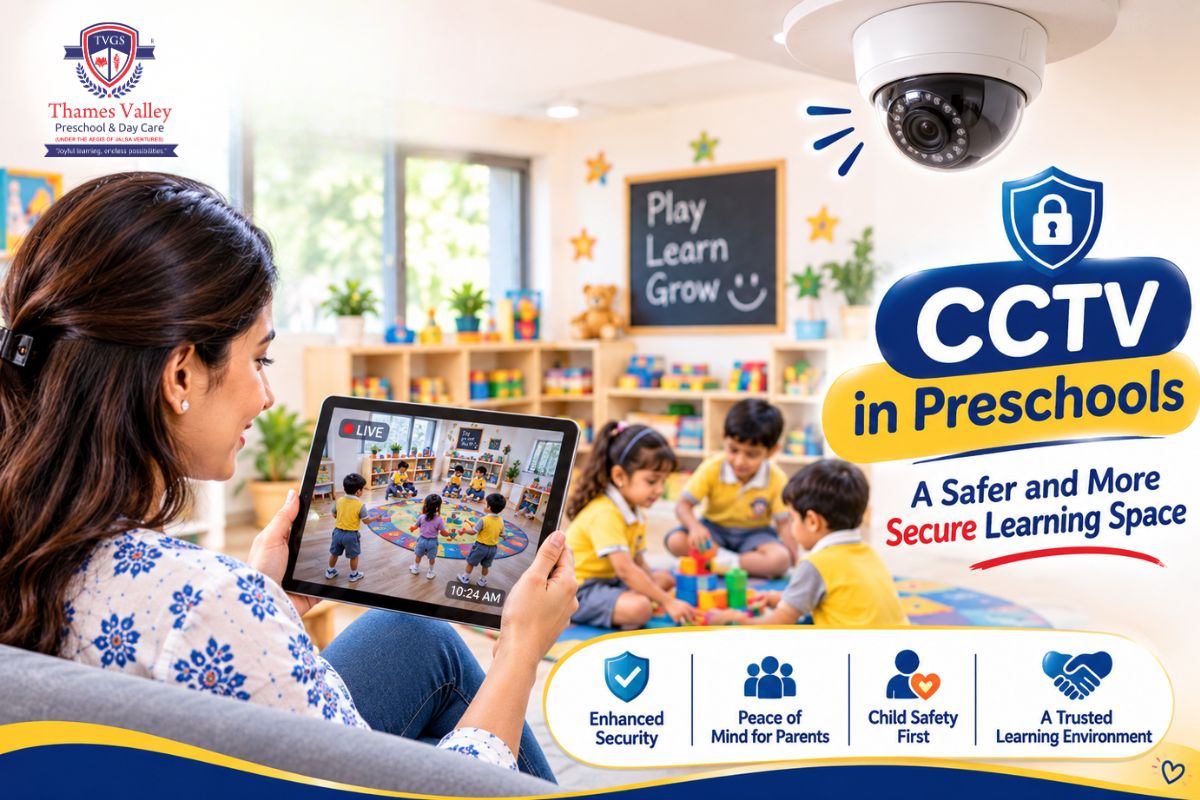
Handing your child to someone else every morning takes trust. That’s why many parents now ask one question early on: does this preschool have cameras? CCTV in preschools can add real safety and transparency, but it isn’t a magic shield, and not every set-up is equal. This guide explains what CCTV does well, where it falls short and what to ask before you decide.
Why does CCTV in preschools matter?
CCTV in preschools matters because it adds a second pair of eyes: it discourages unsafe behaviour, helps review what happened after an incident and gives parents more confidence. It works best as one layer of safety, alongside good caregivers, clear rules and secure entry.
Young children can’t always explain what happened in their day. Cameras give a school a way to check facts calmly, and they remind everyone that the classroom is a shared, accountable space. Used well, that builds trust between parents and staff.
What are the benefits of CCTV in preschools?
There are five main benefits.
- Security at entry points. Cameras at gates and reception help the school see who comes and goes, which supports safe pick-up routines.
- Review after an incident. If a child falls or a dispute arises, the school can check what happened instead of relying on guesswork.
- Transparency for parents. When a school is open about its cameras, parents feel more informed.
- Staff accountability. Staff who know the setting is monitored tend to follow routines and care standards more carefully.
- Faster response. In an emergency, the footage can help staff and, if needed, the authorities understand events quickly.
What are the limits of CCTV in preschools?
CCTV cannot prevent harm on its own, and it can never replace attentive, trained caregivers. A camera records what happens. It doesn’t comfort a crying child or notice a quiet one.
Keep these limits in mind:
- Someone must actually watch or review footage, or the cameras are just decoration
- Cameras have blind spots, so a good school also keeps enough adults in every room
- Footage is useful only if it’s recorded, stored safely and available when needed
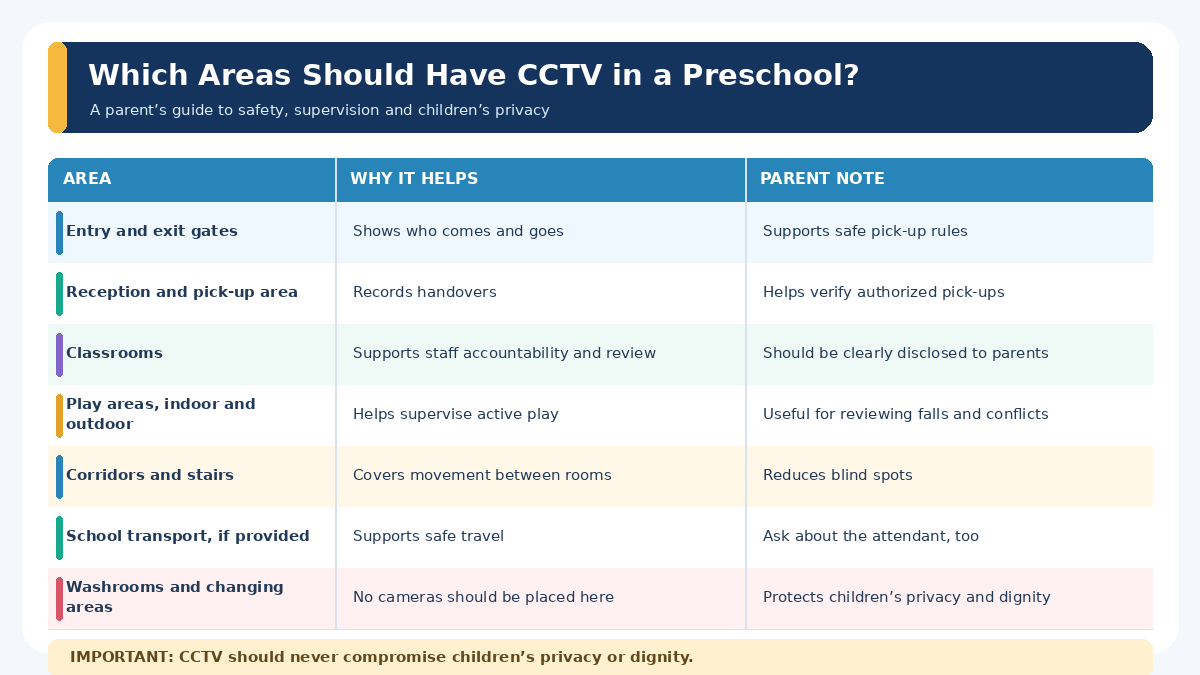
- Privacy matters, and cameras should never be placed in washrooms or changing areas
A school that says “we have CCTV” and stops there hasn’t answered your question. Ask how it works in practice.
Should parents get access to live or recorded footage?
Policies differ. Some centers offer live viewing, some allow parents to review recorded footage on request and some limit access to the school. There’s no single right answer, but there should be a clear, written one.
Parent access can build trust, but it also raises privacy questions, since footage shows other children. Many schools handle this by giving secure access to specific parents or by reviewing footage with a parent when there’s a concern. Options such as live view or recorded footage are offered at Thames Valley centers, and the exact set-up can vary by centre, so ask yours what applies.
What privacy and data questions should you ask?
Footage of children is sensitive personal data. India’s Digital Personal Data Protection Act, 2023 sets rules for handling personal data, including children’s data, so it’s fair to ask how a school looks after it. Rules can change, so check current guidance too.
Ask these questions:
- Who can view the footage, and is access protected by passwords?
- How long is footage stored, and how is it deleted?
- Are parents informed that cameras are in use?
- Is audio recorded, or only video?
- How can I request footage after an incident, and how quickly?
- Is footage ever shared with anyone outside the school?
A good school answers these without hesitation.
What other safety checks matter beyond CCTV?
CCTV is one piece. A safe preschool also has:
- Secure entry and clear rules on who may pick up your child
- Verified staff. Ask how they’re checked, and don’t accept just “yes”
- Few children per adult. Ask for real numbers
- Clean, child-sized washrooms and good hygiene
- First-aid trained staff and a clear emergency plan
- Fire exits and safe furniture
- Safe transport, with an attendant and verified drivers
Our guide on how to choose the best preschool in India and our daycare safety checklist cover these in more detail.
How do you check CCTV during a preschool visit?
Ask to see the set-up, not just hear about it.
- Ask where the cameras are. A good school can show you the covered areas and confirm that private areas are excluded.
- Ask whether they’re working and recording. A camera that isn’t recording doesn’t help anyone.
- Ask who watches or reviews the footage and how often.
- Ask about parent access and the written policy.
- Ask what happens after an incident. How would you be informed, and how would footage be used?
- Watch the staff. Do the adults treat children kindly all the time, or only when they notice a camera? Caregivers who are warm in every moment are what truly protect your child.
What are the red flags?
- Cameras in washrooms or changing areas
- No clear answer on who can view or store footage
- Cameras that are “for show” or not recording
- Refusal to review footage after a genuine concern
- Staff who seem to rely on cameras instead of staying alert in the room
- Pressure to choose the school only because of its technology
Where does Thames Valley Preschool fit in?
Thames Valley Preschool uses CCTV in key areas of its centers, such as classrooms, play areas and entry points, to support safety and transparency. If you’re a parent, ask any centre near you, including a Thames Valley centre, about its camera locations, storage and parent-access policy. If you’re thinking about starting a centre of your own, you can explore Thames Valley Preschool.
Frequently asked questions
Q1. Is CCTV compulsory in preschools in India?
Ans: Rules differ by state and local authority, and requirements can change. Ask the school what applies in your area, and check your state or local authority’s current guidance.
Q2. Can parents watch live CCTV footage of their child’s preschool?
Ans: It depends on the school. Some offer live viewing, some allow parents to review footage on request and some limit access to staff. Ask for the school’s written policy.
Q3. Where should CCTV cameras not be placed in a preschool?
Ans: Cameras should not be placed in washrooms or changing areas. These spaces protect children’s privacy and dignity, and a good school will confirm that they’re excluded.
Q4. How long should a preschool keep CCTV footage?
Ans: There’s no single standard that applies to every school, so ask how long footage is stored, how it’s deleted and who can access it. A good school has a clear, written answer.
Q5. Does CCTV make a preschool completely safe?
Ans: No. CCTV adds a layer of safety and transparency, but it can’t replace trained, attentive caregivers, secure entry, verified staff and a safe number of children per adult.
Q6. Can I ask to see footage after an incident at my child’s preschool?
Ans: You can ask, and a good school should have a clear process for reviewing footage with parents after a genuine concern. Ask about this before you enroll.
Your next step
On your next school visit, ask the five questions on cameras, storage and access, and write down the answers. Then compare them, along with teachers, routine and fees, across your top two schools.
Sources and review: Digital Personal Data Protection Act, 2023 (Government of India) for general rules on handling personal data. Rules and requirements for CCTV in schools can differ by state and authority, so confirm what applies in your area with the school and the local authority.
Sources / Editorial References
UNICEF — Care for Child Development: https://www.unicef.org/documents/care-child-development
India’s Digital Personal Data Protection Act, 2023: https://www.meity.gov.in/static/uploads/2024/06/2bf1f0e9f04e6fb4f8fef35e82c42aa5.pdf
Why CCTV access to Parents in Pre-school is a must and why most pre-schools don’t offer it?:
https://www.footprintseducation.in/blog/why-cctv-access-to-parents-in-pre-school-is-a-must-and-why-most-pre-schools-dont-offer-it/