



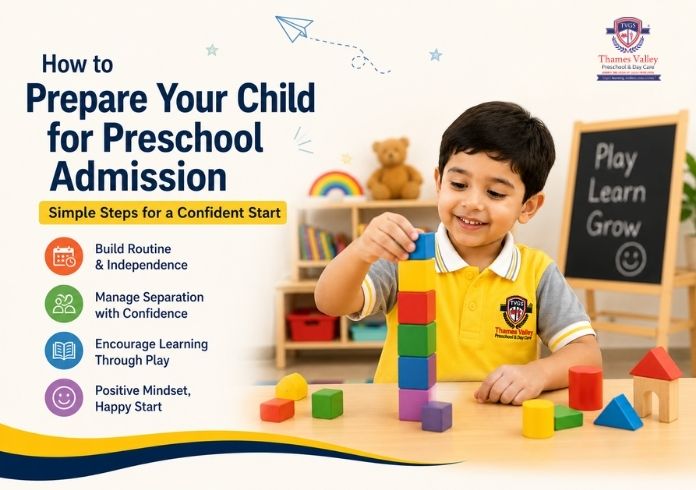
The moment you decide to prepare your child for preschool admission, the focus quietly shifts from paperwork to the little person who will actually walk through the gate. Schools assess readiness far less than parents fear — most good preschools care about warmth and fit, not whether a three-year-old can already recite the alphabet. What genuinely helps is a few weeks of gentle, everyday preparation that builds your child’s confidence and independence. Here is how to do it without pressure.
Start with routine, not academics
Young children feel safe when the day is predictable. In the weeks before preschool, ease into a routine that roughly mirrors a school day: a consistent wake-up time, breakfast, a morning activity, a snack, and some quiet play. You are not trying to run a classroom at home — you are helping your child’s body clock adjust so mornings don’t become a battle later.
Build small independence skills
The skills that make the first weeks smoother are ordinary ones. Practise them playfully rather than as drills:
- Washing and drying hands, and using the toilet with minimal help.
- Opening a tiffin box or water bottle independently.
- Putting on shoes and carrying a small bag.
- Asking for help and saying when they need the washroom.
Every skill your child masters at home is one less thing that feels frightening at school. Celebrate small wins — confidence is built one “I did it myself” at a time.
Ease separation gently
Separation anxiety is normal and temporary. Rehearse short separations before admission: leave your child with a grandparent or trusted friend for an hour, always returning when you say you will. This teaches the most reassuring lesson of all — that goodbyes are followed by hellos. Keep your own goodbyes short and cheerful; long, teary farewells tend to make things harder, not easier.
Talk about preschool in a positive light
Read picture books about starting school, play pretend “school” at home, and talk warmly about the friends, songs and play your child will enjoy. Avoid using school as a threat (“wait till your teacher sees this”). You want your child walking in curious and excited, not wary.
Prepare yourself, too
Children read our emotions with startling accuracy. If you are calm and confident about the transition, your child is far more likely to be. Visit the campus together beforehand so the building feels familiar, and trust the settling-in process — most children who cry at drop-off are happily playing within minutes.
| TIP A helpful mindset: your job before preschool is not to teach ahead of the curriculum, but to raise a child who feels secure, capable and curious. The learning takes care of itself. |
How Thames Valley supports new starters
In our Mom & Me and Play Group stages, teachers are specifically trained to settle anxious first-timers, and our familiar daily rhythm helps children feel at home quickly. If you are still working through the wider admission process, our complete preschool admission guide for parents in India walks you through timelines, documents and age criteria step by step, and our guide on the signs your child is ready for preschool can help you judge the timing.
Frequently asked questions
Q1 : How early should I start preparing my child for preschool?
Ans : About four to six weeks is plenty. Start easing into a routine and practising independence skills gently — beginning too early or too intensively can create pressure rather than confidence.
Q2 : Should my child know letters and numbers before preschool?
Ans : No. A quality preschool teaches early literacy and numeracy at the right pace. Focus instead on independence, communication and comfort with routine.
Q3 : How do I handle crying at drop-off?
Ans : Keep goodbyes brief, warm and consistent, and trust the teachers. Most children settle within minutes once the parent has left. Prolonged farewells usually make separation harder.
Q4 : What should my child carry on the first day of preschool?
Ans : Most preschools recommend a small school bag with a water bottle, healthy snack or lunch (if required), an extra pair of clothes, and any school-requested essentials. Label all belongings with your child’s name.
Q5 : How can I reduce my child’s separation anxiety before preschool starts?
Ans : Practice short separations with trusted family members, maintain a consistent routine, and reassure your child that you will return after school. Positive conversations about preschool can also help build confidence.
Q6 : Should I visit the preschool with my child before admission?
Ans : Yes. Visiting the preschool helps children become familiar with the classrooms, teachers, and environment, making their first day feel more comfortable and less overwhelming.
Q7 : What if my child doesn’t settle into preschool immediately?
Ans : Every child adjusts at their own pace. Some settle within a few days, while others may need a few weeks. Patience, consistency, and regular communication with teachers help children adapt successfully.
| Visit Thames Valley PreschoolGive your child a joyful, safe and inspiring start. Book a campus visit to meet our teachers, see our safety systems, and find the right programme — from Mom & Me to UKG, plus post-school day care.
Enquire about admissions → https://thamesvalleyglobal.org/ |