



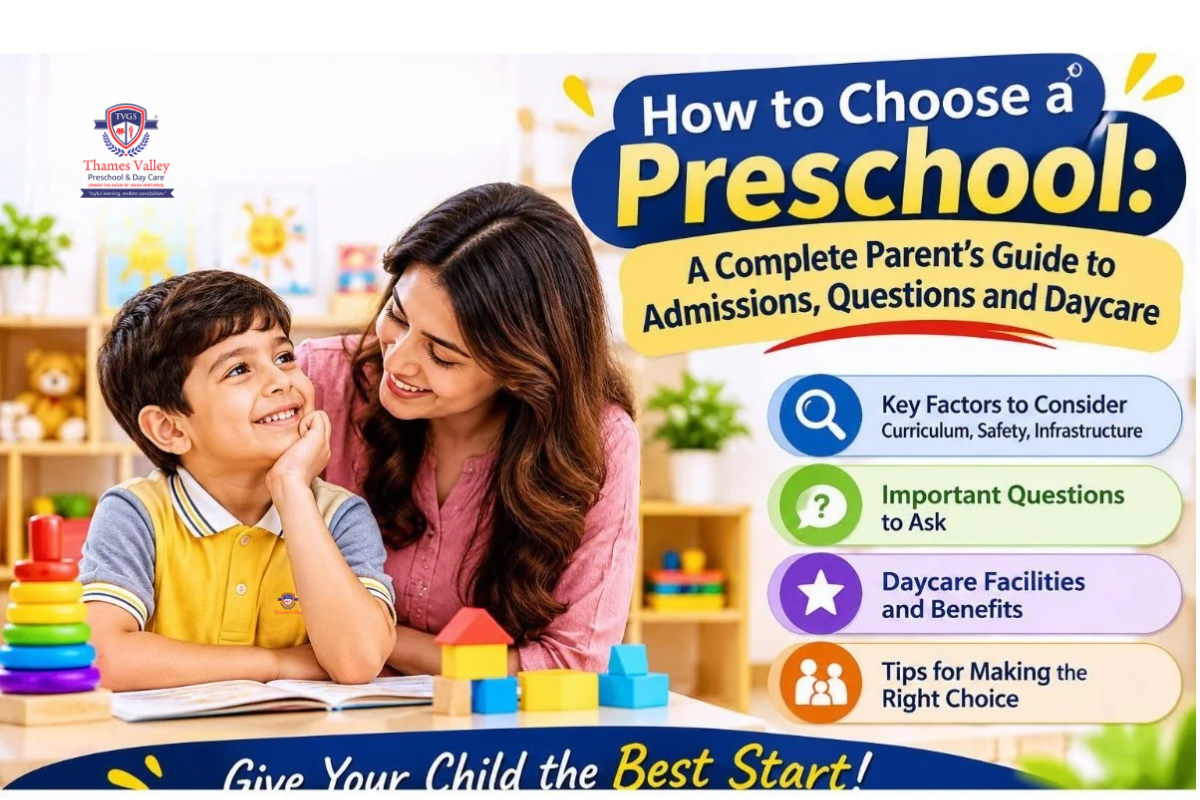
Choosing the right preschool is one of the most important decisions parents make for their child. It is where children begin structured learning, build social skills, develop communication and gain confidence and independence. But with so many preschools available, how do you know which one is right for your child? The best preschool is not simply one with attractive classrooms or modern facilities. It is a place where your child feels safe, happy and comfortable while learning through play and everyday activities.
Before making a decision, parents should look at the teachers, curriculum, safety, hygiene and daycare facilities. Visiting the preschool, observing classroom activities and asking the right questions can help you understand what your child will experience every day. This guide covers the important things to check before choosing a preschool for your child.
1. Understand Your Child’s Needs
Every child grows at a different pace, with unique learning preferences. It is important that parents consider their child’s personality, interests, comfort level and developmental requirements before selecting a preschool. There are children who enjoy group activities and social interactions, as well as children who require their time to adjust to new surroundings. A preschool should be welcoming, supportive and child-friendly and allow children the space to explore and play.
The following needs to be considered:
- Does your child enjoy interacting with other children?
- Does your child need additional emotional support?
- Would a shorter or longer school schedule be suitable?
- Does your child require daycare facilities after school hours?
Understanding these needs will help you shortlist suitable schools.
2. Evaluate the Teaching Approach and Curriculum
A preschool’s curriculum plays a very vital role in the child’s early learning experience. Schools should focus on holistic development along with an academic education. A good preschool should include play, storytelling, music, art, movement, outdoor activities and hands-on experiences in the pedagogy. Parents should enquire whether the preschool follows an established early childhood framework like Montessori, play-based learning or any other approach. The curriculum should include language and communication development, early numeracy and problem solving, social and emotional development, creativity and imagination, physical coordination and motor skills, independence and everyday life skills. A good preschool should balance its activities with free play and exploration.
3. Check Safety, Hygiene and Infrastructure
It is important that a preschool provides a safe and hygienic environment for young students. Parents should observe the classrooms, washrooms, playgrounds and common areas. The preschool should have child friendly furniture, secure entrances, safe play area, clean drinking water and well-maintained sanitation facilities. There should also be CCTV monitoring, visitor management, emergency procedures, first-aid availability and staff training. The children should be sufficiently supervised and should participate in activities without safety risks.
4. Understand the Preschool Admission Process
Preschool admission process is different for different preschools. Some preschools accept application all throughout the year, while others have specific admissions cycles. Ensure that information related to the age eligibility criteria, application deadlines, admission fees, monthly tuition and other charges is available to you.
Enquire whether the school offers an orientation session or interaction before admission. This is very helpful for parents and lets them prepare their child for the transition.
5. Ask the Right Questions During a School Visit
Try visiting the preschool before enrolling as it provides valuable insights about its daily functioning. Parents should interact with teachers, observe classroom activities, and understand how the school handles individual requirements. There are some important questions to ask such as:
- What is the teacher-to-child ratio?
- What qualifications and training do teachers have?
- How does the school handle separation anxiety?
- What is the daily classroom routine?
- How are children’s developmental milestones assessed?
- How frequently do teachers communicate with parents?
- What happens if a child falls sick or gets injured?
- How does the school manage discipline and behavioural challenges?
The answers to these questions will help parents to evaluate how well the preschool will be able to cater to the parents’ objectives.
6. Consider Daycare Facilities and Extended Care
For working parents, it becomes important that a daycare program provides a safe, comfortable and engaging environment beyond regular preschool hours. Parents should check the daycare timings, supervision arrangements, meal facilities, nap schedules and recreational activities. Children should receive individual attention with consistent routines for meals, rest, hygiene and play. The preschool should also be adept in handling emergencies and communicating with parents during extended care hours.
7. Observe Teacher-Child Interaction
Teachers shape the child’s early learning experiences. Parents should observe how teachers interact with children and respond to their questions. Educators must be patient, approachable and attentive to children’s needs. Students should be comfortable in expressing themselves, asking questions and participating in activities.
A positive relationship between teacher and parents helps in building children’s confidence, emotional security and a love for learning.
8. Compare Fees, Location and Parent Reviews
It is important to consider the school fees, distance from home and transportation facilities as well as academic content. Parents should compare the cost of admission, tuition, meals, transportation, daycare and extracurricular activities between preschools. They should read reviews and seek feedback from families who already send their children to the preschool. Decisions should not be made solely on online ratings or attractive infrastructure, and teaching quality, safety, hygiene and the overall learning environment should also be considered.
Conclusion
Ample research, observation and decision-making is required before making a decision on the choice of preschool for a child. Parents should look at how the preschool hones the academic and co-curricular skills of a child, the facilities and the safety considerations that are in place at the preschool. They should add independent observations about the school’s curriculum and teaching practices and make an informed choice. Thames Valley Preschool and Daycare provides a child-centric approach to learning, and seeks to provide a safe environment with a holistic learning journey.
We invite parents to visit their nearby Thames Valley Preschool and Daycare, and make an informed preschool choice. Enquire today and let your child experience a student-centric preschool environment.
Frequently Asked Questions (FAQ’s)
Q1. What should parents look for when choosing a preschool?
Ans: Parents should check safety, hygiene, curriculum, teacher-child interaction, infrastructure, fees and daycare facilities before selecting a preschool.
Q2. What is the right age to start preschool?
Ans: Many children start preschool between 2 and 3 years of age, depending on their readiness, developmental needs and the school’s age eligibility criteria.
Q3. Why is the preschool curriculum important?
Ans: A good preschool curriculum supports language, creativity, communication, social skills and physical development through play and practical activities.
Q4. How can parents check preschool safety?
Ans: Parents should inspect classrooms, washrooms, playgrounds, entry and exit arrangements, CCTV monitoring, first-aid facilities and emergency procedures.
Q5. What questions should parents ask during a preschool visit?
Ans: Ask about teacher qualifications, class size, daily routines, safety policies, learning activities, parent communication and emergency arrangements.
Q6. What is the importance of teacher-child interaction in preschool?
Ans: Positive teacher-child interaction helps children feel comfortable, express themselves, participate in activities and develop social and communication skills.
Q7. What should parents check before choosing a preschool daycare?
Ans: Parents should check daycare timings, staff supervision, meals, nap schedules, hygiene, play activities and emergency arrangements.
Q8. How can parents prepare their child for preschool admission?
Ans: Parents can introduce a daily routine, talk positively about school, encourage social interaction and visit the preschool with their child before admission.
Q9. Should parents compare preschool fees before admission?
Ans: Yes, parents should compare admission fees, tuition, transportation, meals, daycare charges and additional expenses before making a decision.
Q10. Why should parents visit a preschool before enrolling their child?
Ans: A school visit helps parents observe classroom activities, teacher behaviour, cleanliness, safety arrangements and the overall learning environment