


Your child’s brain builds more than one million neural connections every second during the early years of life.
This means the experiences your child has between the ages of two and five shape far more than school readiness. They influence confidence, communication, emotional security, and the ability to learn for years to come.
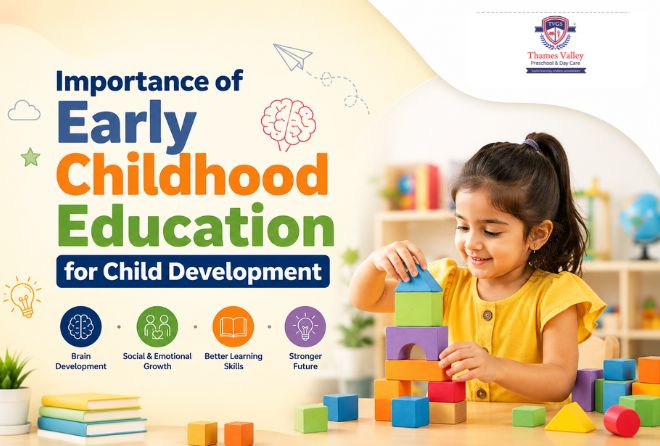
This blog explains the importance of Early Childhood Education, how it contributes to Child Development, and how the right preschool environment supports healthy learning and growth.
How Early Education Shapes Your Child’s Development
Strong Early Childhood Education does not always look like formal learning or traditional classroom teaching. Children naturally learn by asking questions, exploring ideas, solving simple problems, listening to stories, and interacting with others every day.
Quality Preschool Education supports Cognitive Development in children through storytelling, music, counting activities, puzzles, and meaningful conversations.
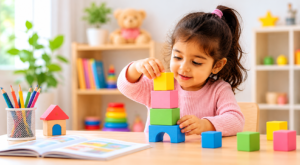
Imagine your child building with blocks while talking about shapes, colours, and balance. That simple activity improves attention, language, memory, and problem-solving skills at the same time. Good Early Learning Programs also help children become more confident learners.
During this important stage of Child Development, children need an environment that supports curiosity, independence, creativity, and comfort with new experiences.
The most beautiful part is that small learning experiences during these years can build lifelong learning habits.
How Preschool Builds Social and Emotional Strength
Many parents focus mainly on reading and numbers when choosing a preschool. However, emotional and social growth is equally important during early childhood.
In a well-structured preschool environment, children learn to wait for their turn, share resources, express emotions, and participate in group activities. These everyday moments quietly build confidence, emotional resilience, and communication skills.
Structured Preschool Learning Activities help children develop routine, emotional understanding, teamwork, and cooperation naturally through guided interaction.
One child may learn how to resolve conflicts respectfully during playtime, while another becomes more confident speaking during circle time. These experiences support healthy Social Skills Development in ways that home environments alone may not fully provide.
Each positive interaction during these years helps shape the person your child gradually becomes.
Why Thames Valley Preschool is the Right Place to Begin
At Thames Valley Preschool, learning happens through curiosity, creativity, interaction, and emotional support rather than pressure or rigid teaching methods.
Our environment helps children build confidence, communication skills, creativity, and overall Child Development through engaging Preschool Learning Activities guided by experienced teachers.
Children feel emotionally safe, socially connected, and excited to participate every day. These are some of the true Benefits of Early Childhood Education and they help create a strong foundation for lifelong learning.
For many parents, that sense of warmth, trust, and consistent growth makes all the difference.
Conclusion
The early years never come back, and the experiences your child has today will shape how they learn and grow in the future. Choosing the right preschool is one of the most meaningful decisions parents can make.
Visit Thames Valley Preschool to explore the learning environment and discover how meaningful early learning can positively shape your child’s future.
Frequently Asked Questions
➤ Why is Early Childhood Education important for children?
Early Childhood Education helps children develop communication, social, emotional, and learning skills during the most important years of brain development.
➤ How does preschool support child development?
Preschool supports Child Development through play-based learning, storytelling, creativity, group activities, and social interaction.
➤ What are the benefits of Preschool Education?
Preschool Education improves confidence, cognitive skills, emotional growth, communication abilities, and problem-solving skills in children.
➤ At what age should a child start preschool?
Most children start preschool between the ages of 2 and 4 years, depending on their learning readiness and social development.
➤ Why are Preschool Learning Activities important?
Preschool Learning Activities help children improve memory, concentration, creativity, motor skills, and social skills in a fun and engaging way.