



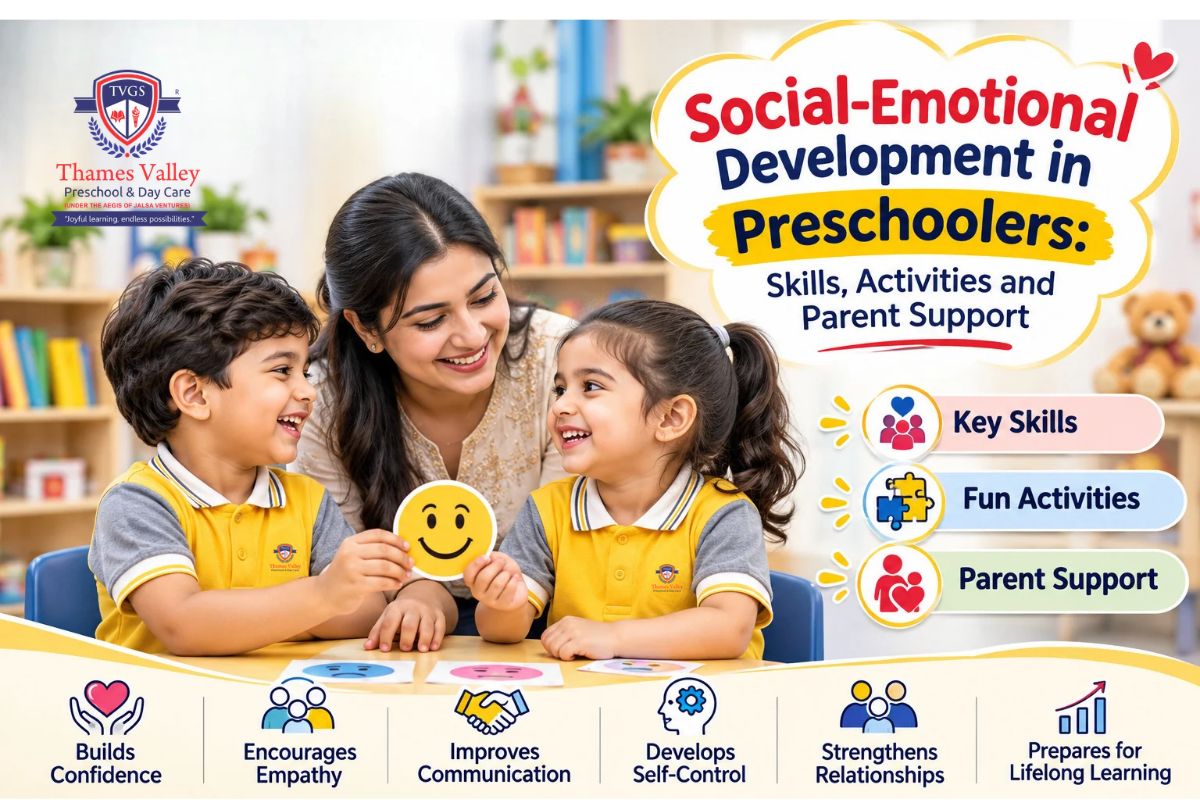
Social and Emotional Development in preschoolers is important for their holistic growth. As preschoolers are rapidly developing their independence, it is essential that they are able to navigate their social-emotional states. In Social-Emotional Development in Preschoolers: Skills, Activities and Parent Support, we look at the ways in which parents can create structure, support connection and build skills in young children.
Preschoolers Need Structure and Growing Independence
Children between the ages of two and five are relying upon their parents while learning to do things independently. As children make small choices, they are beginning to grow as adults. Parents should set clear boundaries to make the day more predictable. The child should be given many chances to practice in a safe relationship.
Why Is Social-Emotional Development Important in Preschoolers
Social-emotional skills influence how children interact with others and their surroundings and respond to challenges. Through these skills, children are able to develop healthy relationships with other children, understand their emotions and feeling such as happiness and anger, develop self confidence and improve their communication. They also develop empathy and learn to manage their emotions.
Essential Social-Emotional Skills Preschoolers Should Develop
Preschoolers should develop the following set of social-emotional skills through their experiences and interactions:
1. Emotional Awareness: They should be able to be self-aware and recognise their emotions. They should understand their emotions and what makes them feel happy, sad, angry, or worried.
2. Self-Regulation: This involves managing their emotions in a healthy manner, especially emotions such as anger and sadness.
3. Social Interaction: Students learn how to share, cooperate, work together in a team and respect others.
4. Empathy and Kindness: They learn to empathise with others when interacting with them and offer other people help, comfort and encouragement.
5. Independence and Decision-Making: As they grow, they make simple choices, complete tasks and become more independent
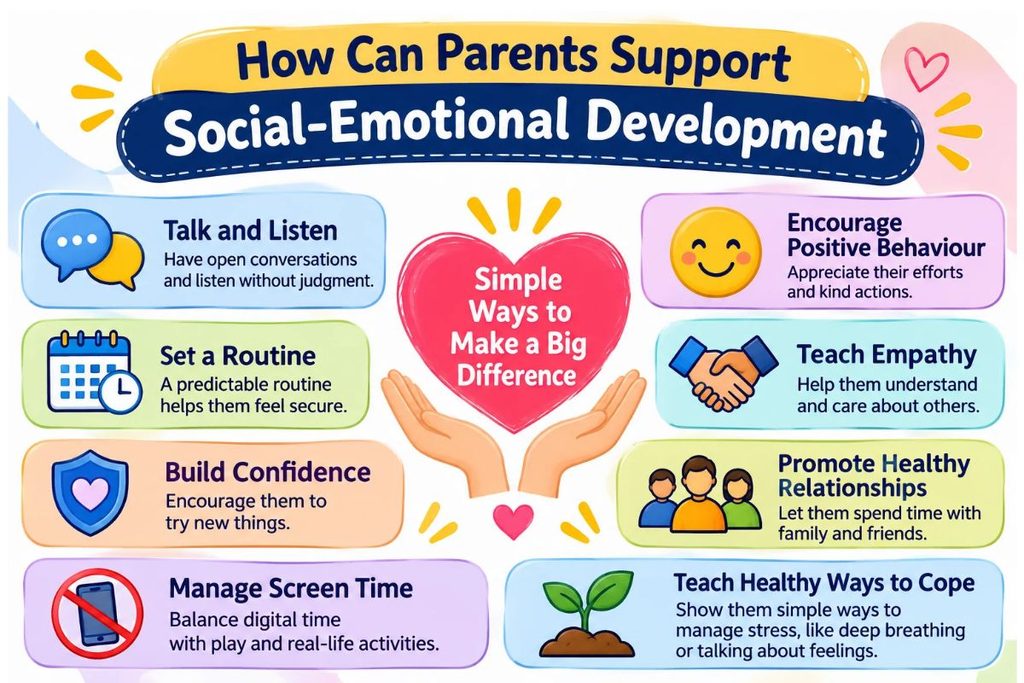
How Can Parents Support Social-Emotional Development?
Parents play an important role in the development of their child’s social-emotional skills. They can achieve this in the following ways:
1. Encourage Open Communication: Children should be able to communicate freely with their parents without feeling judged. Parents should patiently listen to and validate their child’s emotions.
2. Be a Positive Role Model: Children observe and learn from their parents. They imbibe good values such as kindness, patience, respect and ways to manage anger by watching their parents.
3. Establish Consistent Routines: There should be a consistent schedule for young children with regular meal times, playtime, bedtime and family activities that provide children with security and stability.
4. Encourage Independence: Children should be encouraged to make age-appropriate choices, and select their clothes, arrange toys and choose their books.
5. Appreciate Positive Behaviour: Good behaviours such as sharing, helping others and expressing feelings should be praised by parents to encourage positive habits.
6. Create Opportunities for Social Interaction: Parents should organise outdoor games, and involve children in activities that let them interact with other people.
How Thames Valley Preschool Fits Into the Conversation
Thames Valley Preschool provides a positive child-centered environment with attention to physical, social, emotional and intellectual development, along with age-specific preschool programmes. It provides many opportunities for students to socialize and learn under experienced teachers who let the children develop into independent individuals.
Frequently Asked Questions (FAQ)
Q1. What is social-emotional development in preschoolers?
Ans: Social-emotional development relates to a child’s ability to recognise and express emotions, interact with other individuals, build relationships, and navigate feelings. Social-emotional development lets children understand themselves and other individuals.
Q2. Why is social emotional development important during the preschool years?
Ans: The preschool years are special for children as they are rapidly developing their habits, communication, movement, independence and social-emotional skills during period. Forming important skills and habits can form foundations for life.
Q3. What are the key social-emotional skills preschoolers should develop?
Ans: Children should practice skills such as recognising and expressing emotions, sharing and taking turns, developing empathy and kindness, building friendships and developing independence.
Q4. How can parents encourage social-emotional development at home?
Ans: Parents should spend quality time with children, listen to their feelings, encourage sharing and display a positive behaviour.
Q5. What activities help improve social-emotional skills in preschoolers?
Ans: Activities such as role-playing, story-telling, emotional recognition games, group play, and sharing games let children understand feelings, communicate effectively and build positive relationships.
Q6. How does Thames Valley Preschool support social-emotional development?
Ans: Thames Valley Preschool provides opportunities for children to interact with classmates, participate in group activities, share resources, and cooperate with each other. Teachers also help preschoolers to express emotions, resolve conflicts, develop friendships, and follow routines.
References
WHO — Guidelines on physical activity, sedentary behaviour and sleep for children under 5: https://www.who.int/publications/i/item/9789241550536
CDC — Developmental Milestones: https://www.cdc.gov/act-early/milestones/
NAEYC — Developmentally Appropriate Practice: https://www.naeyc.org/resources/position-statements/dap/principles
NAEYC — The Power of Playful Learning: https://www.naeyc.org/resources/pubs/yc/summer2022/power-playful-learning
UNICEF — Care for Child Development: https://www.unicef.org/documents/care-child-development
NHS — Sleep and young children: https://www.nhs.uk/baby/health/sleep-and-young-children/
NHS — Separation anxiety: https://www.nhs.uk/baby/babys-development/behaviour/separation-anxiety/