



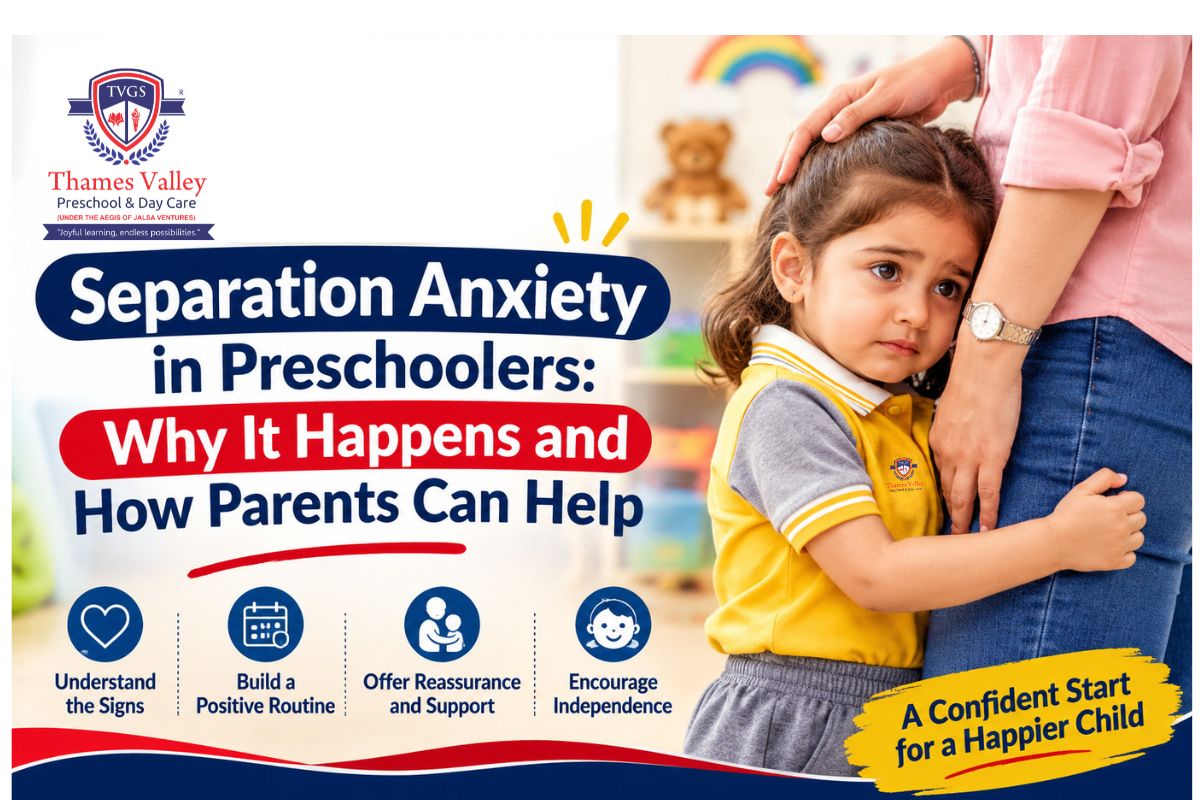
Separation Anxiety in Preschoolers can be vexing for parents as preschoolers are still learning to regulate their emotions and learning. This guide explains how parents can create structure and support their child in managing separation anxiety, without displaying adult-like behavior.
Reasons for Separation Anxiety
Separation anxiety is prevalent among young children and is commonly displayed during nursery or preschool transitions. According to NHS, it is a normal developmental experience in young children. Despite understanding the routine, a child can still feel distressed when having to say goodbye.
Make Goodbyes Short, Warm, and Predictable
For their child, parents should create a simple goodbye ritual, and let the child know who will collect them after preschool. Let the child keep with them a comfort item to feel more at ease during the preschool hours. The NHS advises confident, positive goodbyes and notes that repeated experiences of separation followed by reunion help the child learn that caregivers return.
Preschoolers Need Both Structure and Growing Independence
Between the ages of two and five, children are beginning to act for themselves while still depending on adults for regulation and security. Structured parenting becomes important as clear boundaries make the day predictable, while making small choices lets independence grow. The goal is to help the child practice skills repeatedly in a safe environment and relationship.
Connection Makes Guidance Easier
Children cooperate with adults better when they understand what is happening for them. Naming an emotion, getting down to the child’s level and using short, concrete instructions can be more effective than lengthy explanations during a difficult moment. Once the child is calm, he or she can practice alternatives such as asking for a turn, saying goodbye, putting a device away or moving through a bedtime routine.
Routines Reduce Friction
When the routine is predictable with anchors at wakeup time, meals, preschool, active play, quiet time and bedtime – they are able to anticipate what comes next. Visual routines matter as they turn verbal reminders into something a child can follow independently. Consistency matters, weekends and special events can have different schedules while the main routine remains familiar.
Technology Should Fit Around Childhood, Not Replace It
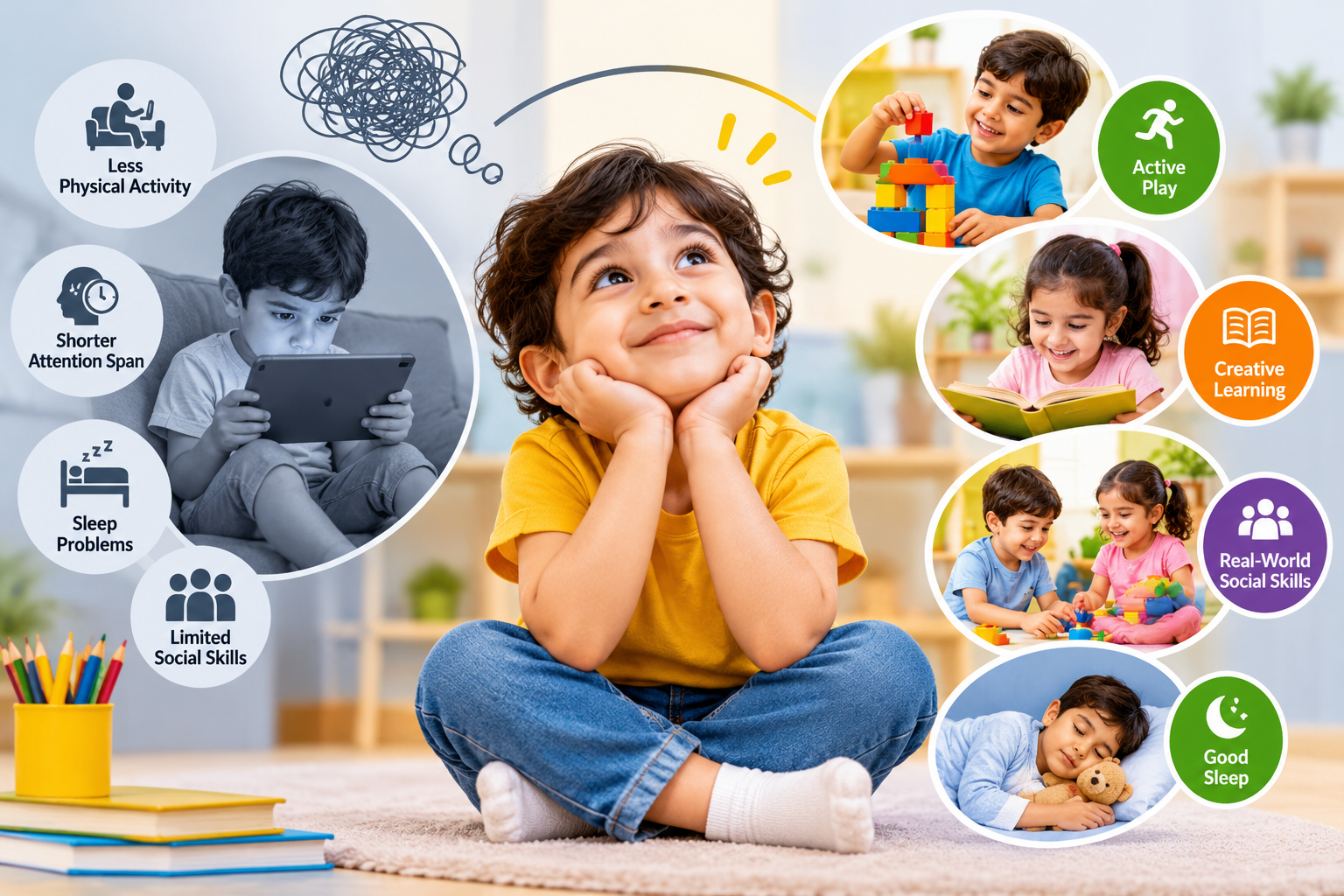
Screen take away time for conversation, physical play, sleep and exploration – even though they can be used for communication and learning experiences. According to WHO, kids between the ages of three to four should receive no more than one hour of sedentary screen time. Quality, context and co-use matter as well as duration: watching together and talking about content is different from leaving a child alone with an endless feed.
Practical Ideas Parents Can Try This Week
Parents should seek to reduce separation anxiety through patience, consistency and understanding. They can make a meaningful difference through simple daily activities, reassuring communication and predictable routines. Children should feel safe and supported before they can be encouraged to make a positive transition between preschool and other social environments.
How Thames Valley Preschool Fits Into the Conversation
Thames Valley Preschool provides a child-centric environment that pays attention to the physical, social, emotional and intellectual development of the child, along with age-specific preschool programmes. Families should enquire how a particular routine can be supported at their local preschool, as day-to-day implementation varies by programme and age group.
The Takeaway
Separation anxiety is a common part of early childhood development, and is experienced as fear, distress and insecurity when children are separated from their families. With patience, emotional reassurance and consistent routines, parents can let their children develop confidence and independence.
Thames Valley Preschool provides a nurturing and intellectually stimulating environment for children, where they can grow out of their separation anxiety and take part in various activities at the preschool with confidence and engagement.
Frequently Asked Questions (FAQ)
Q1. What is separation anxiety in children?
Ans: Separation anxiety is the feeling of fear, distress and insecurity when a child is away from their parents.
Q2. At what age does separation anxiety usually begin?
Ans: Separation anxiety begins around 6-8 months of age, and becomes more noticeable when the child becomes a toddler. It improves eventually as children become more emotionally secure and independent.
Q3. What are the common signs of separation anxiety?
Ans: Some common signs of separation anxiety include crying when parents leave, clinging to parents or caregivers, refusing to attend preschool, difficulty sleeping independently and repeatedly asking when parents will return.
Q4. Why do children experience separation anxiety when starting preschool?
Ans: Children experience separation anxiety when they are introduced to new teachers and surroundings. Being away from caregivers makes them feel uncertain or uncomfortable.
Q5. How can parents reduce separation anxiety in children?
Ans: Parents can reduce separation anxiety by establishing consistent goodbye routines, practicing short separations, encouraging independent play, introducing comfort objects and reassuring children that they will return.
Q6. Should parents leave immediately when their child starts crying at school?
Ans: Parents should follow a calm, predictable goodbye routine rather than prolonging the farewell. They should reassure the child, say goodbye and let the teacher support the transition.
Q7: When should parents seek professional advice?
Ans: Seek individual advice when a concern is persistent, severe, involves health or safety, interferes substantially with daily life, or when a child has lost a skill they previously had.
Editorial References
WHO — Guidelines on physical activity, sedentary behaviour and sleep for children under 5: https://www.who.int/publications/i/item/9789241550536
CDC — Developmental Milestones: https://www.cdc.gov/act-early/milestones/
NAEYC — Developmentally Appropriate Practice: https://www.naeyc.org/resources/position-statements/dap/principles
NAEYC — The Power of Playful Learning: https://www.naeyc.org/resources/pubs/yc/summer2022/power-playful-learning
UNICEF — Care for Child Development: https://www.unicef.org/documents/care-child-development
NHS — Sleep and young children: https://www.nhs.uk/baby/health/sleep-and-young-children/
NHS — Separation anxiety: https://www.nhs.uk/baby/babys-development/behaviour/separation-anxiety/