



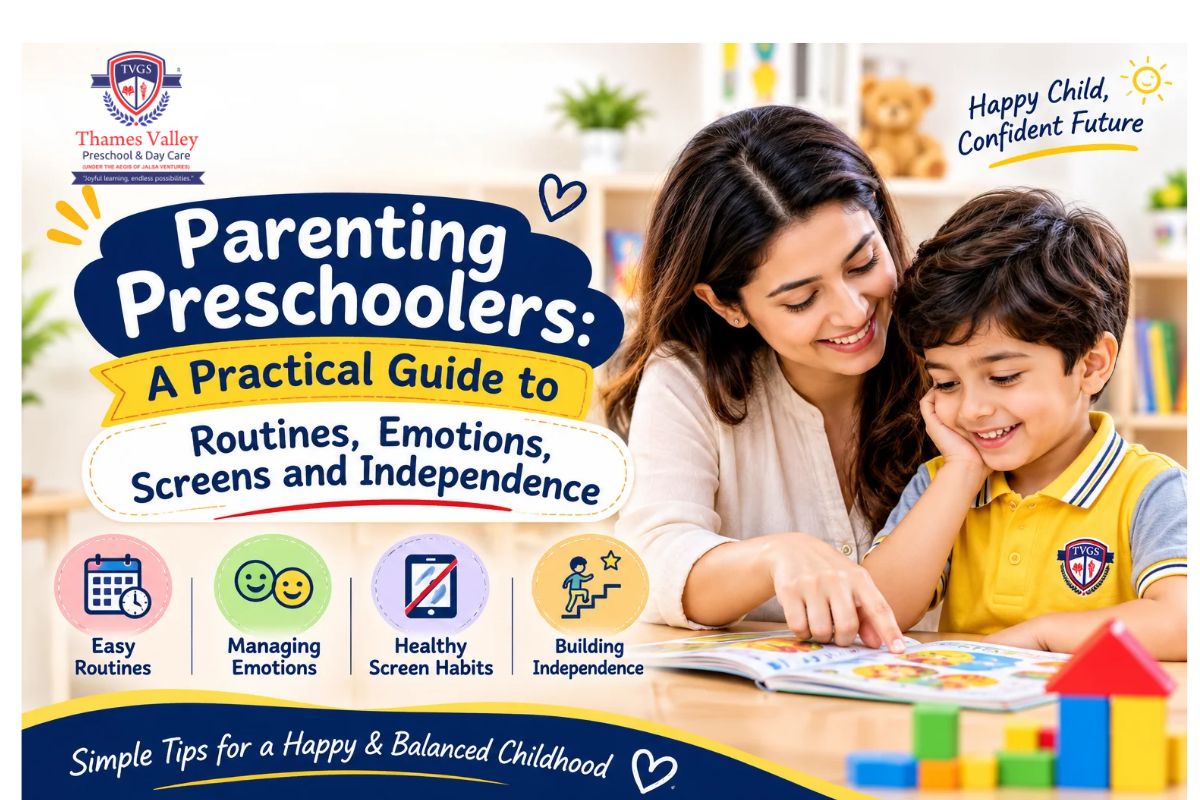
It can feel demanding to parent preschoolers as they are developing independence but still do not have control over their emotions or impulses. Parenting Preschoolers: A Practical Guide to Routines, Emotions, Screens and Independence discusses practical methods to create structure, support connection and build skills without making the child display adult-like self-control.
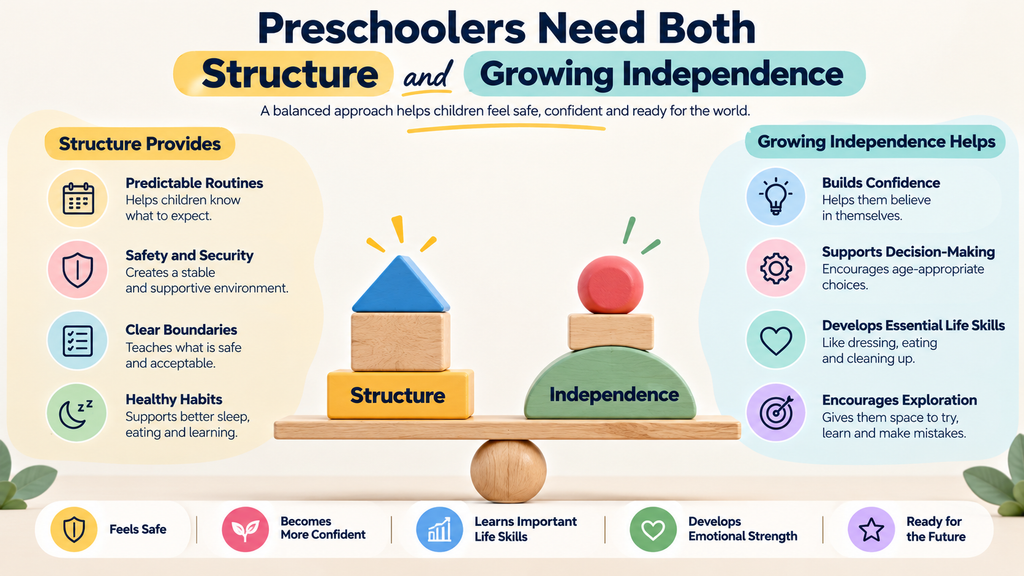
Preschoolers Need Both Structure and Growing Independence
Children between the ages of two and five are learning several things by themselves while relying upon adults for regulation and security. Parents must seek to set clear boundaries to make the day predictable, while let the children make small choices to help their independence grow. The goal is to let the child practice skills in a safe relationship. Parents should look for patterns over days and weeks, and share the observed routine with educators as the child grows. They should refrain from comparing their child with other children.
Connection Makes Guidance Easier
Parents should seek to explain children and teach them to cooperate by getting down to their level. Using short, concrete instructions is effective than using lengthy explanations during a difficult moment. Once the child is calm, he or she can practice alternatives such as asking for a turn, saying goodbye, putting a device away or moving through a bedtime routine.
Routines Support Daily Activities
Children should have predictable routines and time to wake up, for meals, preschool, active play, quiet time and bedtime as it organizes their day. Routines can also be followed by children more easily. Consistency makes the day more identical and lets children be organized, supporting daily activities.
Technology Should Fit Around Childhood, Not Replace It
Screentime is useful to children as they can learn communication and experience selected learning through technology. However, they replace the time meant for conversation, physical play, sleep and hands-on exploration. According to WHO, children between the ages of three to four should only be allowed one hour of sedentary screentime. It is still better to watch content together with your child than to leave his or her alone with an endless feed.
Know When a Difficulty Needs More Support
Parents should be able to manage common preschool challenges such clinginess at drop-off, bedtime resistance, tantrums or selective eating. What matters is the intensity, duration and impact. In case of persistent anxiety, sleep problems, behaviour or other concerns, parents should seek advice from a health and child-development professional.
Practical Ideas Parents Can Try This Week
Parents can try practical ideas such as using one visual routine, offer the child with two acceptable choices, create one screen-free family period, name emotions during calm periods and let the child practice one independent task such as packing away toys or carrying a bag.
How Thames Valley Preschool Fits Into the Conversation
Thames Valley Preschool provides a child-centered environment that pays attention to the physical, social, emotional and intellectual development of the child, along with providing age-specific preschool programmes. Families should enquire how a relevant routine or developmental area is supported at their local preschool center.
The Key Takeaway
Our Center recognises that parenting preschoolers is not a single target to optimize but a part of the child’s wider development. Expectations should be kept age-appropriate, and activities should be offered with repeated opportunities to practice. The child’s response should be observed and parents should work with educators where possible. In case of persistent or significant medical concern, seek individual professional advice rather than relying on general online guidance
Frequently Asked Questions (FAQs)
Q1: Why is parenting preschoolers important in the preschool years?
Ans: The preschool years witness a rapid growth in habits, communication, movement, independence and social-emotional skills. Creating repeated everyday experiences during this period can create useful foundations for later wellbeing.
Q2: Should every preschooler develop at exactly the same pace?
Ans: No, as children vary in temperament, experience and development pace. Milestones and age guidance are reference points, and are not meant to compare between children.
Q3: How can parents and preschool work together?
Ans: Parents should share routines and observations with the preschool, and ask how particular skills are supported during the day. They should focus on achieving small practical goals instead of hoping for identical behaviour in every setting.
Q4: When should parents seek professional advice?
Ans: Parents should seek professional advice in case of a persistent concern, which is severe and involves the health and safety of children, or interferes with daily life.
Q5. How much screen time is suitable for preschoolers?
Ans: For children aged 3–4, WHO recommends no more than one hour of sedentary screen time daily; less is better.
Q6. How can I help my child manage emotions?
Ans: Teach simple emotion words and encourage children to express their feelings.
Q7. How can I reduce separation anxiety at preschool drop-off?
Ans: Follow a consistent goodbye routine and reassure your child calmly.
Q8. How can parents and teachers support a child’s development?
Ans: Regular communication helps parents and teachers understand the child’s needs and progress.
Q9. When should parents seek professional advice?
Ans: Seek guidance when a concern is persistent, severe, or affects everyday activities.
Q10. How does preschool support emotional and social development?
Ans: Preschool provides opportunities to interact with others, share, communicate, and build relationships.
References
WHO — Guidelines on physical activity, sedentary behaviour and sleep for children under 5: https://www.who.int/publications/i/item/9789241550536
CDC — Developmental Milestones: https://www.cdc.gov/act-early/milestones/
NAEYC — Developmentally Appropriate Practice: https://www.naeyc.org/resources/position-statements/dap/principles
NAEYC — The Power of Playful Learning: https://www.naeyc.org/resources/pubs/yc/summer2022/power-playful-learning
UNICEF — Care for Child Development: https://www.unicef.org/documents/care-child-development
NHS — Sleep and young children: https://www.nhs.uk/baby/health/sleep-and-young-children/
NHS — Separation anxiety: https://www.nhs.uk/baby/babys-development/behaviour/separation-anxiety/