



We all have often heard the phrase “fine motor skills”, but rarely understand the concept behind it. The idea is simpler than it sounds and plays an important role in a child’s overall development. Developing Fine Motor Skills in Children involves strengthening the small muscles of the hands, fingers, and wrists, helping children perform everyday tasks with greater control and confidence. Activities such as drawing, colouring, cutting with child-safe scissors, threading beads, building with blocks, and playing with clay can make this development fun and engaging. Regular practice of these activities supports hand-eye coordination, concentration, writing readiness, self-care abilities, and independence while creating a strong foundation for future learning.
The Concept behind Fine Motor Skills
Simple, precise movements made with the hands and fingers which involve the coordination of muscles are known as fine motor skills. These movements are made as a result of direct input from sensory organs such as eyes and ears.
We can compare fine motor skills with gross motor skills to understand the difference between the two movements. Gross motor skills involve the utilisation of bigger muscles of the body for activities such as playing football and climbing stairs. Finer activities such as picking up a paint brush and buttoning a shirt involve fine motor skills.
Everyday Activities That Help Develop Fine Motor Skills in Children
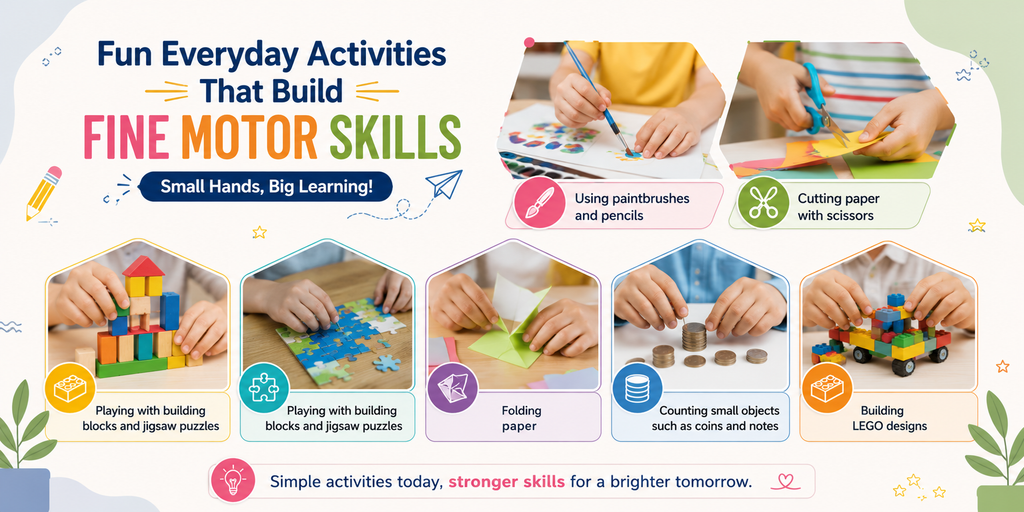
Fine motor skills are an important part of a child’s everyday life. Developing Fine Motor Skills in Children happens naturally when they take part in simple activities that require small, controlled movements of their hands and fingers. Some common examples include:
- Using paintbrushes and pencils
- Cutting paper with scissors
- Buttoning T-shirts and Pants
- Folding paper
- Playing with building blocks and jigsaw puzzles
- Counting small objects such as coins and notes
- Building LEGO designs
These may look like simple childhood activities, but they involve the coordinated use of the small muscles in the hands, fingers, and wrists. Regular practice through playful, age-appropriate activities can make Developing Fine Motor Skills in Children enjoyable while also preparing them for important skills such as writing, drawing, dressing, and other classroom and self-care tasks.
Understanding The Pincer Grasp: A Basic Fine Motor Skill
The pincer grasp is an important fine motor skill, which is the activity of picking up a small object using the thumb and index finger. It is among the first movements made in babyhood and is refined during child’s early years.
The pincer grasp, being the foundation of the pencil grip, matters since it leads the child to write later on. Many playful activities such as picking up beads work precisely to strengthen this grip.
Development of Fine Motor Skills by Age
Developing Fine Motor Skills in Children happens gradually, and every child reaches different milestones at their own pace. During the preschool years, children slowly gain better control over their fingers, hands, and wrists through everyday activities like drawing, cutting, building, and writing. Here’s what you may commonly notice at different ages:
Around Age 3: Children start developing better control over crayons and pencils, often using their fingers and wrist to make simple lines, circles, and basic drawings. They may enjoy building towers with blocks, threading large beads, working with playdough, and using child-safe scissors. At this stage, the main focus is developing a comfortable grip and improving hand-eye coordination.
Around Age 4:By this age, children generally become more confident with drawing and begin creating shapes such as squares, crosses, and simple figures. They may be able to cut along straight or curved lines, copy some letters, and add more details to their drawings. Many children also begin showing a clear preference for using one hand more than the other.
Around Age 5: Children usually develop greater control and precision in their hand movements. They may use a more mature pencil grip, cut out simple shapes, draw people with several recognizable body parts, and write or copy many letters. These abilities can support their transition into more structured classroom activities and early writing tasks..
Note: These milestones are general guidelines, not strict rules. Children develop at different rates, and reaching a milestone a little earlier or later is completely normal. Providing plenty of opportunities for Developing Fine Motor Skills in Children through enjoyable, age-appropriate activities is more important than comparing one child with another.
Why Fine Motor Skills Matter
These skills appear simple but are the foundation for the child’s future skills. This is because of the following reasons:
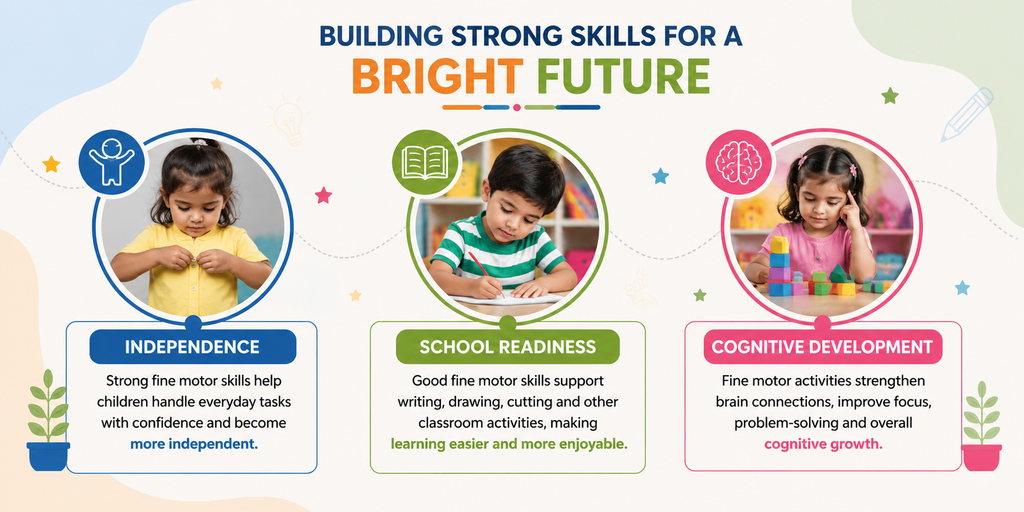
Independence: These skills are essential for the child to care for himself, and go a long way in helping them dress up as well as use a spoon at the dining table independently.
School readiness. Skills such as writing, drawing and using classroom materials depend on fine motor control. A child with underdeveloped fine motor skills has less attention left for learning. Fine motor skills are intrinsically tied to writing ability.
Cognitive development. According to recent research, fine motor skills are linked with broader thinking ability. Preschoolers’ fine motor performance is closely connected to their early reasoning and cognitive developmen
Development of Fine Motor Skills
These skills develop through regular opportunities for hands-on play and practice, as children who engage in activities like drawing, building, colouring, puzzles, playdough, and simple crafts gradually improve their hand control and coordination. Gross motor strength also supports the development of controlled fine movements, as children gain better coordination and body control over time. Every child develops at their own pace, so small differences in when these skills appear are completely natural and usually not a cause for worry. Developing Fine Motor Skills in Children can be encouraged through simple, enjoyable activities at home and preschool.
When to Seek Support
Some delay in fine motor skills is natural, as observed in around 10-15% of preschoolers. Consider speaking to a paediatrician if your child displays consistent delay in performing fine motor activities or is below the typical standard for their age. An early assessment can provide targeted interventions to improve the child’s performance.
Key Takeaways
Fine motor skills are the small, precise hand and finger movements that help young children perform everyday activities, from holding a crayon and turning pages to buttoning a coat and using scissors. Developing Fine Motor Skills in Children naturally takes place during the preschool years and plays an important role in building independence, coordination, and school readiness. For parents searching for fine motor activities near me, simple options such as drawing, colouring, puzzles, playdough, and building blocks can easily be included in a child’s daily routine. With regular practice and playful learning at home or preschool, children can gradually strengthen these essential skills and build confidence for future learning.
Frequently Asked Questions About Fine Motor Skills
Q1. What is the difference between fine and gross motor skills?
Ans: Fine motor skills involve the small muscles of the hands, fingers, and wrists for activities such as holding a pencil, buttoning clothes, or using scissors. Gross motor skills involve larger muscles and whole-body movements such as running, jumping, climbing, and balancing.
Q2. What is a pincer grasp?
Ans:A pincer grasp is the ability to pick up a small object using the thumb and index finger. It is an important early skill that supports the development of a proper pencil grip and later handwriting abilities.
Q3. Why are fine motor skills important for children?
Ans: They help children become more independent with everyday tasks such as dressing, eating, drawing, writing, and playing. These skills also contribute to school readiness, coordination, concentration, and overall development.
Q4. What are some examples of fine motor activities for preschoolers?
Ans: Drawing, colouring, threading beads, playing with clay, building blocks, puzzles, cutting paper, using tweezers, and completing simple crafts are effective activities for preschool children.
Q5. How can parents help develop fine motor skills at home?
Ans: Parents can provide opportunities for children to draw, colour, play with playdough, build with blocks, sort small objects, fold paper, use child-safe scissors, and participate in simple arts and crafts.
Q6. At what age do children develop fine motor skills?
Ans: Fine motor development begins in infancy and continues throughout childhood. During the preschool years, children gradually gain better control and precision in activities such as drawing, cutting, building, and writing.
Q7. Does handwriting depend on fine motor skills?
Ans: Yes. Good hand and finger control helps children hold pencils correctly, form letters, control movements, and gradually develop more comfortable and confident handwriting.
Q8. How does play help with fine motor development?
Ans: Play gives children natural opportunities to practise small hand movements without making learning feel like a task. Activities such as puzzles, blocks, drawing, and construction games can improve hand-eye coordination and finger control.
Q9. What skills improve through fine motor activities?
Ans: Regular practice can support hand-eye coordination, finger strength, dexterity, concentration, precision, pencil control, and independence in everyday activities.
Q10. When should parents be concerned about a child’s fine motor development?
Ans: Children develop at different rates, so small differences are usually normal. However, if a child consistently struggles with age-appropriate tasks or loses previously developed skills, parents can discuss their concerns with a pediatrician or qualified child-development professional.
10 Easy Fine Motor Skills Activities for 3-Year-Olds at Home
August 21, 2026[…] with a paediatrician to better understand the reason behind the difficulty or lack of engagement. Developing Fine Motor Skills in Children takes time, patience, and regular opportunities for playful practice, especially when preparing them […]