




A three-year-old child can develop a wide range of fine motor abilities through simple everyday activities. When these activities are playful, easy, and stress-free, children can practise hand and finger movements naturally while enjoying the process. Parents can use common household materials to create engaging learning experiences without needing expensive toys or equipment. Here are 10 Easy Home-based Fine Motor Activities for 3-Year-Olds that can support hand strength, coordination, concentration, and early writing skills.
What to Expect at Age 3
According to occupational therapy milestones, a three-year old is able to build towers from blocks, string large beads, make snips and hold crayons with their fingers.
Children should be encouraged to focus on drawing basic vertical lines, horizontal lines and circles, which are the building blocks of letters. A playful approach to writing is the right approach as most children do not begin formal writing until they are four years old.
The 10 Fine-Motor Activities
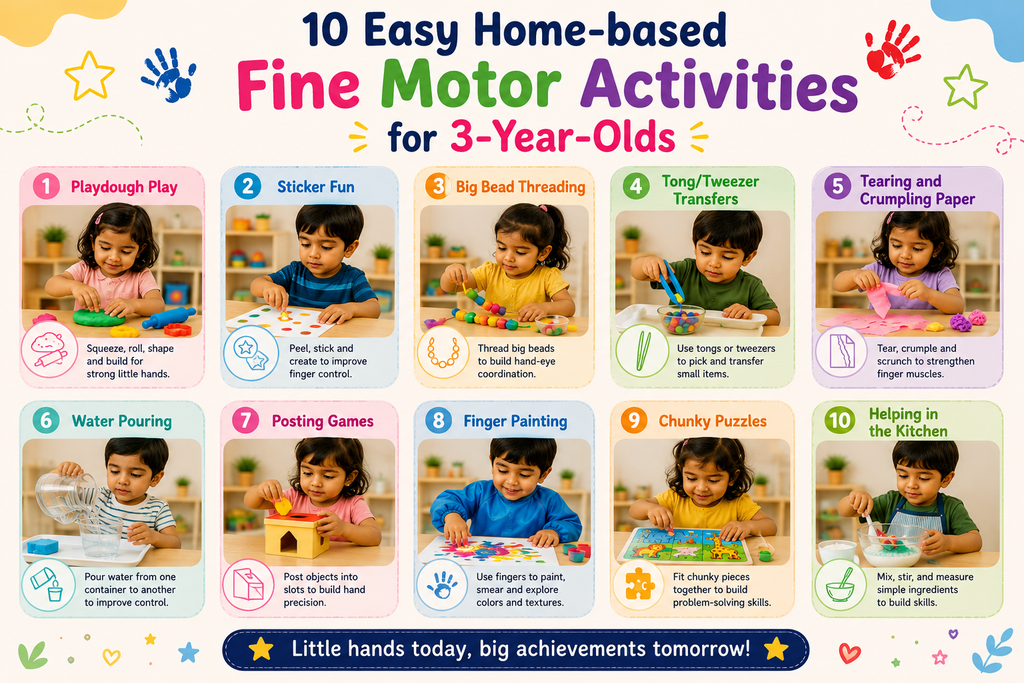
1. Playdough Play: The most important fine motor activity for 3-year-olds. Squeezing, rolling, poking, and flattening playdough strengthens their hands. Roll “snakes” together, make pretend food, or hide beads inside for your child to take out.
2. Sticker Fun: Peeling stickers can help with developing the pincer grasp, while sticking them to a paper helps in building precision. 3-year-olds adore playing with stickers.
3. Big Bead Threading: Children can play with chunky beads and a shoelace to build a thread. Under parental supervision, it helps to enhance hand-eye coordination
4. Tong/Tweezer Transfers: Utilising kitchen tongs to move cotton balls between bowls is a fantastic way to build grip. Children can start with big tongs, which are easier to use by their small hands.
5. Tearing and Crumpling Paper: By tearing old newspapers into strips and crumpling them into balls, children build hand strength and learn to use their hands together.
6. Water Pouring: To build wrist control and coordination, let the child pour water back and forth between jugs.
7. Posting Games: Cut a slot in a plastic lid, and allow the child to post coins, buttons, or lolly sticks through it. This action is great for finger control, but requires supervision with small objects.
8. Finger Painting: This activity allows your child to be creative and develop their motor skills by building finger awareness and control.
9. Chunky Puzzles: Moving and placing each puzzle piece helps to build pincer grasp and problem-solving skills.
10. Helping in the Kitchen: Cutting and peeling vegetables and fruits such as oranges helps with building motor skills and cognitive growth.
Tips for Success With 3-Year-Olds
Some basic tips for making 10 Easy, Fun Fine Motor Activities for 3-Year-Olds enjoyable and effective are:
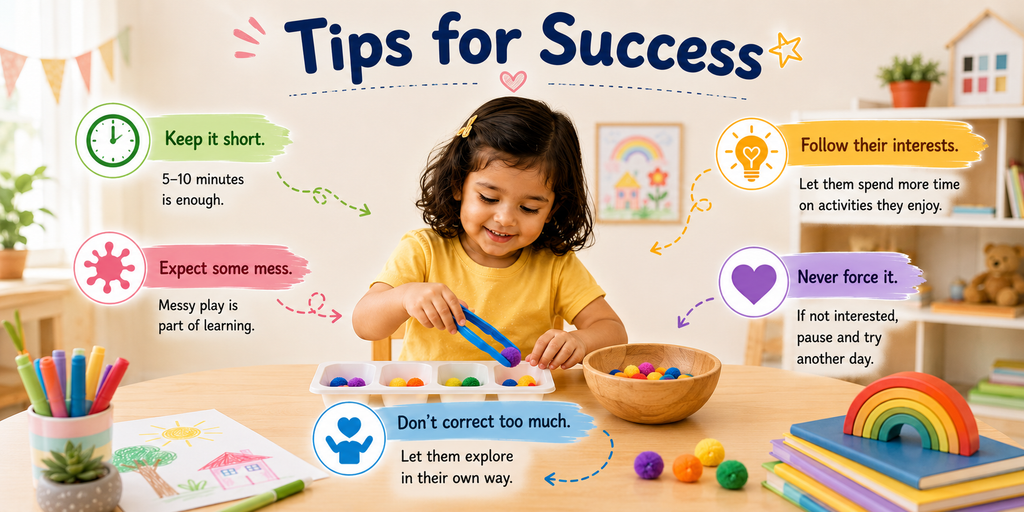
- Keep it short: Children tire quickly, so five to ten minutes is usually enough for each activity.
- Expect some mess: Paper scraps, playdough, or spilled water are natural parts of hands-on learning.
- Don’t correct too much: Give children the freedom to explore and complete activities in their own way.
- Follow their interests: Let them spend more time on activities they enjoy, as interest encourages learning.
- Never force it: If a child is not interested, stop and try the activity again another day.
A Note on Development
Every child develops at their own pace, so it is normal for one child to enjoy repeating an activity while another may quickly lose interest. Some activities may also feel challenging depending on a child’s age, confidence, and abilities. Parents can keep trying different 10 Easy Home-based Fine Motor Activities for 3-Year-Olds and choose activities that match their child’s interests. If a child consistently struggles with or avoids activities that involve fine motor skills, parents may consider discussing their concerns with a paediatrician to better understand the reason behind the difficulty or lack of engagement. Developing Fine Motor Skills in Children takes time, patience, and regular opportunities for playful practice, especially when preparing them for preschool admission and a positive early-learning experience.
Read More: The Complete Preschool Admission Guide for Parents in India
The Key Takeaway
For a three-year-old, 10 Easy Home-based Fine Motor Activities for 3-Year-Olds can make skill development a fun and pressure-free experience. Simple activities such as drawing, threading, building, sorting, and playing with playdough can gradually strengthen the small muscles in the hands and fingers while improving coordination and control. These skills are useful for everyday self-care tasks as well as future writing activities. A supportive preschool center with a safe and engaging learning environment can further encourage children to practise these skills through hands-on activities. Keeping each session short, enjoyable, and suited to the child’s interest allows them to learn naturally, build confidence, and grow as an independent learner.
FAQ’s (Frequently Asked Questions)
Q1: Which fine motor skills should a 3-year-old have?
Ans: Most 3-year-olds can build a tower with blocks, draw simple circles and lines, string large beads, make small cuts with child-safe scissors, and hold a crayon or pencil using their fingers.
Q2: How long should fine motor activities last for a 3-year-old?
Ans: Around 5 to 10 minutes is generally enough for a focused activity. If the child is enjoying it, the activity can continue naturally without forcing them to stay longer.
Q3: Should a 3-year-old be writing letters?
Ans: Not necessarily. At this age, children are still developing pencil control and hand strength. Drawing lines, circles, simple shapes, and scribbling are valuable steps toward future writing.
Q4: What are some easy fine motor activities for a 3-year-old?
Ans: Drawing, colouring, playing with playdough, threading large beads, building blocks, puzzles, tearing and folding paper, and using child-safe scissors are simple options.
Q5: Can household items be used for fine motor activities?
Ans: Yes. Everyday items such as paper, cardboard, clothespins, large buttons, containers, spoons, and safe household objects can be used for supervised activities.
Q6: How does playdough help develop fine motor skills?
Ans: Squishing, rolling, pinching, flattening, and shaping playdough helps children strengthen their fingers and hands while improving coordination and control.
Q7: Do fine motor activities help with handwriting?
Ans: Yes. Activities that strengthen hand muscles and improve finger control can prepare children for holding writing tools and developing better pencil control later.
Q8: What should parents do if a child loses interest in an activity?
Ans: Avoid forcing the child. Try a different activity, make the task shorter, or connect it with something the child already enjoys. Keeping activities playful is more effective than creating pressure.
Q9: How often should a 3-year-old practise fine motor activities?
Ans: Short, regular opportunities throughout the week are useful. Fine motor practice can easily be included in everyday play, arts and crafts, dressing, eating, and simple household activities.
Q10: When should parents seek advice about fine motor development?
Ans: Children develop at different rates, but if a child consistently struggles with age-appropriate hand activities, avoids using their hands, or loses previously developed skills, parents can discuss their concerns with a paediatrician or child-development professional.
15 Fine Motor Activities for 4-Year-Olds to Try at Home
August 26, 2026[…] pencil control, finger strength, and pre-writing skills. For younger children, you can also explore 10 Easy Home-based Fine Motor Activities for 3-Year-Olds.which includes age-appropriate activities that build the foundation for later writing and fine […]