



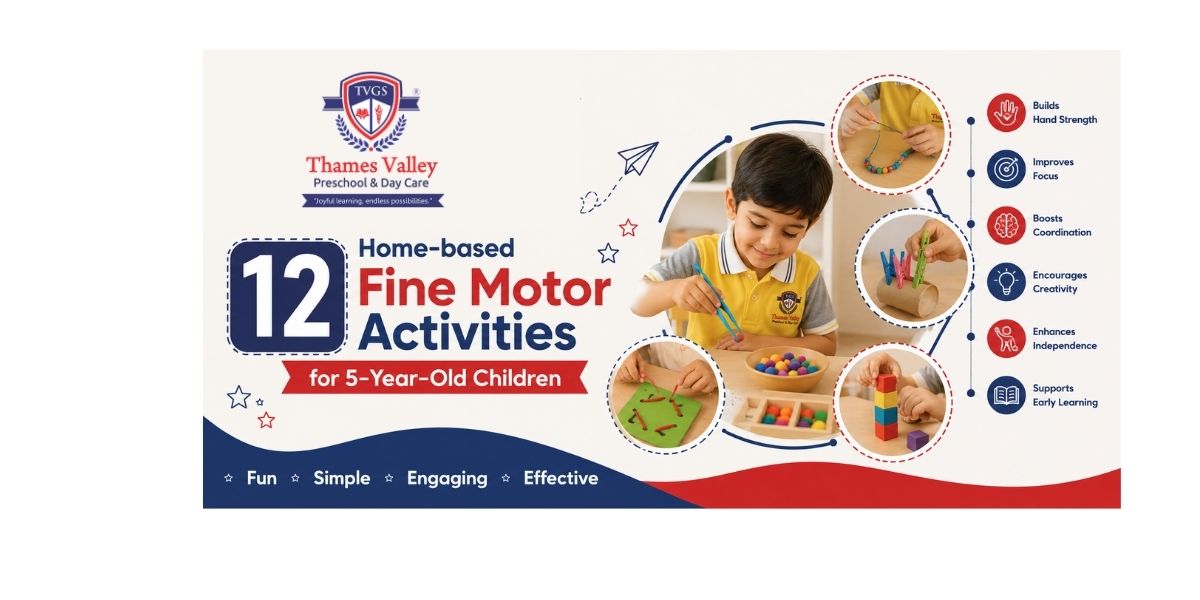
Five is the year before the “big school.” At this age, your child’s hands are becoming more skilled, supporting a mature pencil grip, cutting shapes, drawing pictures, and forming letters. These skills lay the foundation for handwriting, confidence, and independence. 12 Home-based Fine Motor Activities for 5-Year-Old Children can make this development fun and engaging.
Here are twelve simple home-based activities your child can try at the age of five.
What to Expect at Age of 5
By the age of five, children begin to demonstrate a mature pencil grasp, cut out accurate shapes, draw a detailed person with a head, body, and arms, and write many letters as well as their own name. Incorporating 12 Home-based Fine Motor Activities for 5-Year-Old Children can further support these essential skills through fun and practical learning at home.
The 12 Activities
Building Pencil Control
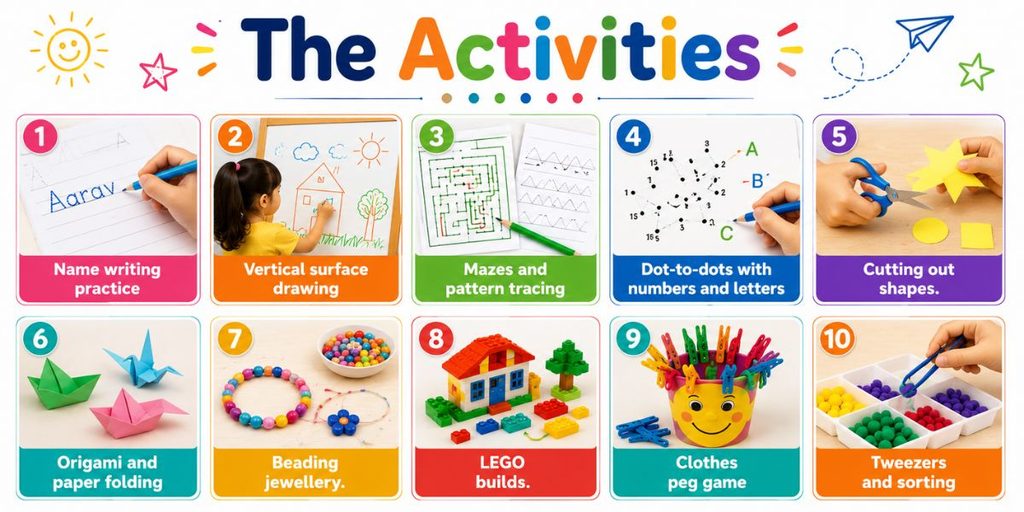
1. Name writing practice. Playful sessions for children to practise writing their own name, while encouraging playfulness and their independence.
2. Vertical surface drawing. Drawing or writing on an easel, whiteboard, or paper taped to a wall builds the wrist and shoulder strength to support handwriting.
3. Mazes and pattern tracing. More complex mazes and pattern-copying further help to build the precise pencil control which is used to draw letters.
4. Dot-to-dots with numbers and letters. These develop pencil control along with early literacy and numeracy.
Cutting and Crafting
5. Cutting out shapes. Craft projects that require cutting simple circles and squares and gluing them help children to develop their motor skills at this age.
6. Origami and paper folding. Folding paper builds precision and two-handed coordination. A paper aeroplane is fine motor practice along with a fun activity for kids.
7. Beading jewellery. Making jewellery with beads is an activity full of fun and concentration and is motivating for children.
Strength and Coordination
8. LEGO builds. Following the instructions, children can build complex block sets and strengthen their fingers and planning skills.
9. Clothes peg games. Clipping pegs onto a line or container edge with matching colours or letters is an excellent pincer-strength practice.
10. Tweezers and sorting. Tweezers can be used to sort small beads and sequins by colour to refine precision and create detailed handwork.
Real-Life Independence
11. Shoelace tying. This activity is a milestone skill for children of the age of five. It involves complex fine motor coordination and is a basic activity for marking the independence of children.
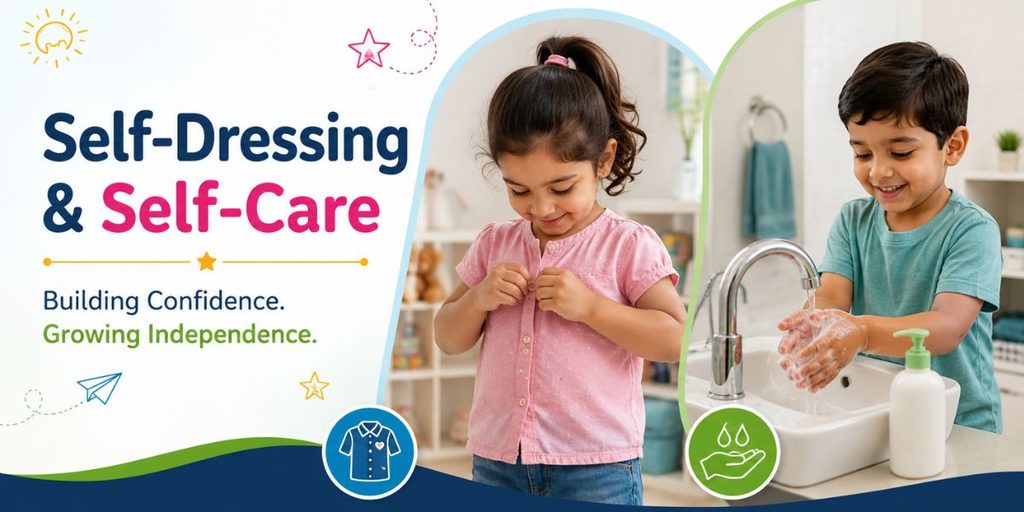
12. Self-dressing and self-care. Buttoning, closing zips and opening containers are fine motor training skills which build independence for schools.
Getting the Pencil Grip Right
By the age of five, a mature tripod grip involving the thumb, index, and middle finger develops. There is no need to panic if children still grip with a full fist or too many fingers. 12 Home-based Fine Motor Activities for 5-Year-Old Children can help build hand strength through playdough, spray bottles, and pegs. Try shorter pencils or a silicone pencil grip to encourage a comfortable and effective hand grip.
READ- MORE = Signs Your Child Is Ready for Preschool
Tips for the 5-year-old Child
- Make writing joyful. Writing should be introduced as a fun activity instead of a task to be performed. Simple fine motor activities like tracing, drawing, and name writing can make practice more enjoyable.
- Make their whole hands strong. Writing, cutting, threading, playdough, and other fine motor activities help develop the hand strength and coordination children need for everyday tasks.
- Build stamina gradually. Handwriting involves patience and endurance; short, frequent fine motor activities can build these skills without making children feel tired or pressured.
- Celebrate independence. Every button, lace, and self-care activity helps prepare children for school and supports their confidence. These skills can also make the transition to admission and preschool more comfortable.
- Don’t over-drill academics. Children’s hands need to be strong and ready before expecting advanced writing skills. Keep fine motor activities playful and focus on readiness rather than forcing children to write too early. When choosing a preschool, look for an environment that supports this development before and after admission.
The Key Takeaway
At five, fine motor activities are all about building the groundwork for kindergarten readiness, independence, and writing skills. 12 Home-based Fine Motor Activities for 5-Year-Old Children can strengthen pencil grip, cutting, coordination, and self-care skills. At our centers, we encourage playful, activity-based learning that helps children develop hand strength and motor control, preparing them to enter school with confidence and enthusiasm.
FAQ’s ( Frequently Asked Question )
Q1: What fine motor skills should a 5-year-old have?
Ans: Most 5-year-old children can use a mature pencil grip, cut out simple shapes, draw a person, write several letters and their own name, and manage basic tasks such as buttons and zips. Development varies from child to child.
Q2: How do I help my 5-year-old child hold a pencil correctly?
Ans: Build hand strength through playdough, clothes pegs, tweezers, and other hands-on activities. Shorter or thicker pencils can also make gripping easier. Avoid forcing a particular grip.
Q3: Should my 5-year-old be writing before kindergarten?
Ans: Some letter and name-writing practice can be helpful, but it should remain playful. Focus on developing hand strength, coordination, and confidence rather than expecting perfect handwriting.
Q4: What are the best fine motor activities for 5-year-olds at home?
Ans: Activities such as name writing, drawing, tracing, cutting shapes, origami, beading, LEGO building, clothes peg games, and tweezer sorting can provide enjoyable fine motor practice.
Q5: How does cutting with scissors improve fine motor skills?
Ans: Cutting helps children develop hand strength, finger coordination, visual-motor control, and the ability to use both hands together. Start with simple lines and shapes before moving to more detailed patterns.
Q6: Is LEGO good for developing fine motor skills?
Ans: Yes. Building with LEGO requires children to pick up, position, connect, and separate small pieces. These actions can strengthen finger muscles and improve hand-eye coordination.
Q7: Can playdough help improve fine motor skills in a 5-year-old?
Ans: Yes. Squeezing, rolling, pinching, flattening, and shaping playdough encourage hand and finger strength while also supporting coordination and creativity.
Q8: Why are tweezers and sorting activities useful for children?
Ans: Using tweezers requires controlled finger movements and hand-eye coordination. Sorting small, safe objects also encourages concentration, precision, and controlled grasping.
Q9: How can fine motor activities support kindergarten readiness?
Ans: Fine motor activities help children develop the hand strength and coordination needed for tasks such as writing, drawing, cutting, using classroom materials, and managing personal belongings independently.
Q10: How often should a 5-year-old practice fine motor activities?
Ans: Short, enjoyable sessions incorporated into everyday play can be effective. Rather than focusing on a fixed duration, offer a variety of activities regularly and allow your child to practice at their own pace.
The Difference between Fine Motor and Gross Motor Skills
August 31, 2026[…] benefit from activities such as climbing, jumping, drawing, and writing. Parents can introduce 12 Home-Based Fine Motor Activities for 5-Year-Old Children through simple, playful tasks that strengthen hand control, coordination, and concentration. By […]