



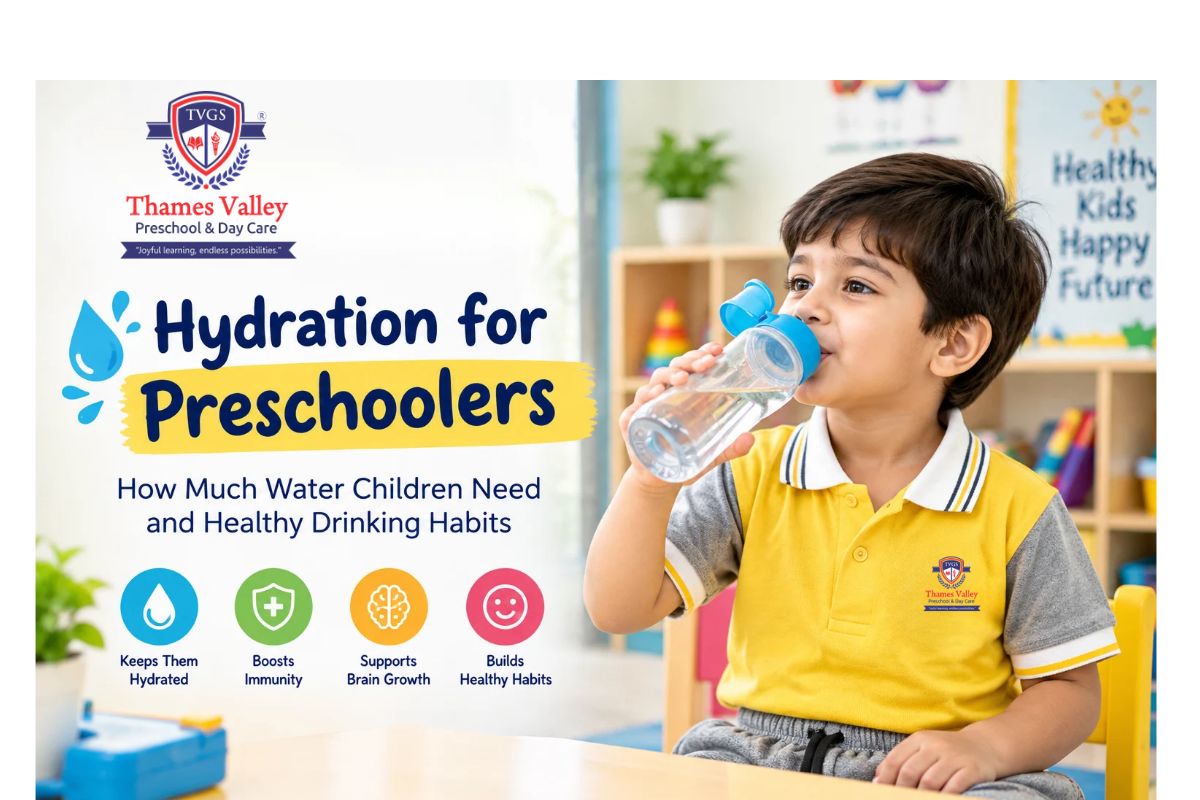
During the preschool years, routines around eating, movement, sleep, hygiene, and self-care begin to emerge. Hydration for Preschoolers: How Much Water Children Need and Healthy Drinking Habits sheds light upon the healthy habits that parents can repeat at home and coordinate with preschool around drinking water.
This article is part of Thames Valley Preschool’s parent learning hub on child health and wellness.
Make Water Easy to Access
Preschoolers become so engrossed in play that they often forget to stop and hydrate themselves. Parents and teachers should remind children to drink water during play and around meals. Water should be made accessible in an age-appropriate bottle or cup. Parents and teachers can set up reminders throughout the day to drink water.
Habits, Weather, and Activity
The weather, presence of an illness, and prolonged active play can increase the requirement of water. Sugary drinks should not be promoted at the cost of water. Symptoms such as intense thirst or dehydration require medical advice.
Preschool Years and Health
During early childhood, routines around food, movement, sleep, hygiene, and self-care start to become fixed. Health routines should be repeated calmly instead of being presented as rules.
Build Habits Through Routine, Not Pressure
Good hydration habits can be built in children when their parents act as role models and follow good water habits themselves. Using personalized reusable bottles also helps children develop drinking water habits. Parents can add natural flavors to the water, such as by adding orange, watermelon, and berries. Children should be taught to recognize when they feel thirst and respond to it.
How Thames Valley Preschool Fits Into the Conversation
Thames Valley Preschool provides a child-friendly environment where attention is given to the child’s physical, social, emotional, and intellectual development, along with the specific preschool programs. For families, it makes sense to coordinate their routine with the preschool so that habits are better imbibed among preschoolers.
The Key Takeaway
Hydration for preschoolers is best followed as a part of inculcating good habits among preschoolers. Keep expectations age-appropriate and observe the child’s responses. Thames Valley Preschool provides a warm and nurturing environment where students’ good habits are developed and potential is honed.
Frequently Added Questions (FAQ’s)
Q1: Why is hydration for preschoolers important in the preschool years?
Ans: Forming good water habits ensures that health and well-being are ensured among preschoolers. Repeating habits ensures that a firm foundation can be formed for later learning and well-being.
Q2: Should every preschooler develop at exactly the same pace?
Ans: No. As every child has a different temperament, their developmental pace differs.
Q3: How can parents and preschool work together?
Ans: Preschools can reinforce existing routines formed at home.
Q4: When should parents seek professional advice?
Ans: When a concern is persistent, severe, and involves health and safety, parents should seek professional advice.
Q5: How much water should a preschooler drink each day?
Ans: Water needs vary by age, activity level, weather, and diet. Encourage regular water intake throughout the day rather than waiting until the child feels thirsty.
Q6: What are the signs that a preschooler may need more fluids?
Ans: Dry lips or mouth, dark-colored urine, tiredness, and reduced urination can be signs of inadequate hydration. Encourage water and seek professional advice if symptoms are concerning.
Q7: Is water better than sugary drinks for preschoolers?
Ans: Yes. Water is a simple and healthy choice for everyday hydration. Sugary drinks should generally be limited because they can add unnecessary sugar to a child’s diet.
Q8: How can parents encourage preschoolers to drink more water?
Ans: Keep a child-friendly water bottle easily accessible, offer water regularly, and make drinking water part of everyday routines such as meals, playtime, and outdoor activities.
Q9: Do preschoolers need more water during outdoor play?
Ans: Children may need additional fluids during active play, exercise, or hot weather. Offer water before, during, and after physical activity.
Q10: How can a preschool help children develop healthy drinking habits?
Ans: A preschool can provide regular water breaks, make drinking water easily accessible, and encourage children to choose water as part of their daily routine.
References
1. WHO—Guidelines on physical activity, sedentary behavior, and sleep for children under 5: https://www.who.int/publications/i/item/9789241550536
2. CDC—Developmental Milestones: https://www.cdc.gov/act-early/milestones/
3. NAEYC—Developmentally Appropriate Practice: https://www.naeyc.org/resources/position-statements/dap/principles
4. NAEYC—The Power of Playful Learning: https://www.naeyc.org/resources/pubs/yc/summer2022/power-playful-learning
5. UNICEF—Care for Child Development: https://www.unicef.org/documents/care-child-development
6.NHS — Sleep and young children: https://www.nhs.uk/baby/health/sleep-and-young-children/
7.NHS — Separation anxiety: https://www.nhs.uk/baby/babys-development/behaviour/separation-anxiety/
8.Thames Valley Preschool — Official website: https://thamesvalleyglobal.org/
9.Thames Valley Preschool — Admissions: https://thamesvalleyglobal.org/admission/